


The Future of Technology: Why You Should Pursue Electronics Engineering

Are you a high school graduate aiming for a flourishing career in the field of electronics? If so, the Bachelor of Electronics Engineering (BE Electrical) course is perfect for you. It is a 4-year course created specifically for students who want to gain knowledge and skills in the design, development, and testing of electrical systems and electrical equipment. Once you graduate from the program, you are sure to have a broad knowledge of circuits, power, analytics, thermodynamics and heat transfer, electromagnetics, power systems, hydropower, signals, and power distribution. As one of the primary of many new technologies developed in today’s modern world, the area of application of electronics engineering ranges from television and radio to computers and telecommunication systems.
Why you should Choose Electronics Engineering?
The curriculum for BE Electrical is designed to ensure that the students can learn how to utilize and manage electrical energy, and biomedical instrumentations from the four-year theory and practical lessons that the course provides. It will educate the students starting from the very basics of electronics, communication systems, and digital technologies. Furthermore, it is carefully designed to provide an in-depth understanding of several major themes that allow students to equip themselves with the most comprehensive knowledge of telecommunication systems, digital communication, electromagnetic fields, and wireless network communication. This base cannot only make you able to develop innovative solutions but also give you the ability to engage in serious research and practical projects.
Key Benefits of Pursuing Electronics Engineering
- Comprehensive Knowledge Base: This program will equip each student with detailed knowledge in areas such as circuit design, power systems, signal processing, and network communication, building a strong foundation in the theoretical and practical aspects of electronics and communication.
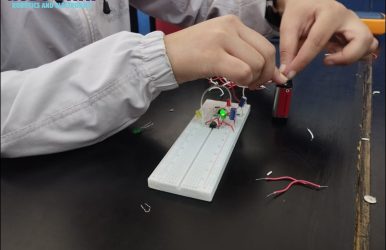
- Hands-On Experience: This course places an emphasis on practical experience rather than theoretical knowledge and shall engross students with its extensive laboratory work and projects from real life in order to develop problem-solving skills and creativity, which have to be embedded in students for them to face engineering challenges.
- Technical Proficiency: In the course of studying Electronics and Communication Systems, every student shall undergo rigorous training that will instill in them the technical ability and knowledge in the areas of electronics, control systems, and renewable energy technologies, which would enable them to excel in all types of engineering roles.
- Diverse Career Opportunities: Starting from Power Supply Management and Renewable Energy Engineering to Research and Development, it encompasses all those streams of career building in its Working Circle after graduation. This is because the diversified skill sets attained through the program open doors to multiple industries for graduates.
How to know if you are eligible to enroll in the course?
The requirements to join TU’s BE Electrical program are quite simple. Each aspiring student should be from the science stream and have to pass the +2 exam or an equivalent exam recognized by TU. However, they are required to have a minimum of 50 % in aggregate and 50 % marks in Physics, Chemistry, and Mathematics to be eligible for enrollment Furthermore, the student must score a minimum grade of C for each subject in the +2 exam. Additionally, candidates must successfully clear the Entrance Exam administered by TU. Once these requirements are fulfilled, you are more than eligible to enroll in a BE Electrical course in Nepal. Each university conducts its entrance exam after the publication of class 12 results. The exam typically tests your understanding of relevant subjects and your problem-solving abilities.
What is the Admission Process?
The application process for TU’s BE Electrical program consists of only a few easy steps. Interested students should start their admission process by obtaining the Entrance Form from colleges affiliated with TU offering the program. However, the student must first make sure that he/she is eligible to enroll in the program. Now, after completing the form, applicants must collect their essential documents such as academic transcripts, certificates, and identification. This is because every college requires the submission of photocopies of such important documents. Following the submission of your documents and entrance form, candidates should prepare for their entrance exam. They are required to successfully take the BE Electrical Entrance Exam on the designated date. Upon passing the exam, students can secure admission to their preferred college, based upon the marks they scored and the availability of seats in the respective college.
Exploring the Curriculum and Specializations:
The Bachelor of Electronics and Communication Engineering encompasses various topics relevant to a successful career in the respective field. These include the study of basic electronic elements and their application, electricity transmission, and distribution as obtained in power systems; the techniques of analyzing and manipulating signals through signal processing; and principles of wireless network design and operation in wireless communications. It has further specializations related to Power Systems, Electronics, Control Systems, Renewable Energy, Signal Processing, Nanotechnology, VLSI Design, and Aerospace and Avionics, all of which would ensure that the student gets an all-rounded education.
What are your Career Prospects and Opportunities?
A degree in Electronics Engineering opens up numerous career paths. These include an electrical engineer who designs, develops, and tests electrical systems and components; a power supply manager who is mainly concerned with the management of generation and distribution of electrical power; a system controller tasked with monitoring and managing the operations of an electrical grid; a renewable energy engineer who is involved in the development and implementation of renewable energy systems; an instrumentation engineer who is in charge of designing and maintaining instruments and control systems used in several industries; and a research and development specialist whose aim is to develop products in electronic technology better than those already in the market. Additionally, graduates can get involved in business activities in the field of technology entrepreneurship by developing and managing their businesses. Skilled engineers will be highly sought after by consumer electronics, robotics, and artificial intelligence firms. Overall, such opportunities are open to graduates both in Nepal and foreign countries with competitive salaries and high promotion potential.
Conclusion
If you aspire to play a crucial role in the advancement of technology and innovation, pursuing a Bachelor of Electronics and Communication Engineering in Nepal is a wise choice. With a well-structured curriculum, practical training, and diverse career opportunities, this program offers a solid foundation for a rewarding career in technology. Embrace the challenges, leverage the knowledge and skills gained, and prepare to contribute to the ever-evolving world of electronics and communication. Your journey toward a successful career in this dynamic field begins with this exciting academic pursuit.
See more articles like this

BE Computer in Nepal is one of the most sought-after choices among +2 Science students interested in technology, but what happens if your entrance...

A safe rank for engineering is one of the first things Nepali students start searching for after the IOE entrance result, especially when comparing...

Choosing engineering courses in Nepal is one of the biggest academic decisions many students make after +2 Science. Every year, thousands of Nepali students...