


What If I Don’t Get BE Computer? Discover BE Electronics in Nepal
BE Computer in Nepal is one of the most sought-after choices among +2 Science students interested in technology, but what happens if your entrance rank or available seats do not lead to BE Computer? For many students, the immediate reaction is disappointment because they assume the alternative means leaving engineering or giving up on careers in AI, software, robotics, IoT, cybersecurity, or other emerging technologies. That assumption deserves a closer look. BE Electronics in Nepal can keep you within engineering while opening substantial opportunities across hardware, software, communication systems and intelligent technologies. Understanding the BE Computer vs BE Electronics relationship, your IOE Entrance options, and the career scope of electronics engineering can help you make the next decision based on what you actually want to learn and build.
Table of Contents
Part 1: BE Computer in Nepal — What Does Not Getting BE Computer Actually Mean?
For students searching for BE Computer in Nepal, not receiving a BE Computer seat can initially feel much bigger than an admission result. You may have spent your final months of +2 preparing for engineering entrance, watching programming videos, discussing Computer Engineering with friends, and telling your family that BE Computer was your plan. Then the IOE Entrance result arrives, admission priorities begin, and suddenly the path looks different from what you imagined.
The first thing to understand is that not getting your first-choice program does not necessarily mean you have lost your opportunity to build an engineering career around technology. Kathford’s current engineering admission process requires eligible students to clear the IOE entrance examination and then rank their preferred engineering programs through the college priority process. Kathford specifically notes that a student selected for a program other than the first preference can discuss the available options with the college.
This is where BE Computer vs BE Electronics becomes important.
Suppose a student from Kathmandu wanted BE Computer because they were interested in robotics, AI, programming and smart devices. Their admission result does not provide the expected BE Computer option, but BE Electronics, Communication and Information Engineering is available. The student may immediately think, “But I wanted computers, not electronics.”
That reaction is understandable, but it may be based on an outdated picture of electronics engineering.
Kathford’s Electronics, Communication and Information Engineering learning model includes electronic systems and communication foundations, but it also includes programming languages such as Python, Java and JavaScript, hardware-software co-design, real-time operating systems, IoT, cloud computing, data analytics, AI and machine learning, database tools, cybersecurity, networking protocols, and design and prototyping skills.
That does not make BE Electronics in Nepal identical to Computer Engineering. The programs have different academic foundations and emphasis. Computer Engineering places stronger emphasis on computing systems and software-related areas alongside hardware, while Electronics, Communication and Information Engineering develops from electronics, signals, communication and embedded technologies into modern computing applications.
But the overlap is significant enough that students should investigate it rather than rejecting the alternative from its name alone.
The real question after an unexpected IOE Entrance outcome is therefore not simply, “Did I get Computer?” Ask yourself what attracted you to Computer Engineering. Was it software? Artificial intelligence? Robotics? IoT? Cybersecurity? Hardware? Networking? Building intelligent devices?
Once you answer that question, BE Computer vs BE Electronics becomes a meaningful academic comparison rather than an emotional reaction to an admission list.
Part 2: IOE Entrance — Don’t Let One Admission Result Define Your Engineering Future
The IOE Entrance result matters because it affects the engineering admission options available to you. But an entrance rank is still an admission outcome at the beginning of your engineering journey. It cannot tell you what kind of engineer you will become four years later.
This distinction matters enormously in Nepal because students often connect entrance rank, college and program choice with personal ability. After results are published, conversations become filled with questions such as “Rank kati aayo?”, “Computer payau?” and “Kun college ma naam niskyo?” A student who had confidently planned for BE Computer in Nepal can quickly begin feeling that another engineering program represents failure.
It does not need to be viewed that way.
Imagine two students who both wanted Computer Engineering. One receives BE Computer while another enters BE Electronics in Nepal. Four years later, their capabilities will not be determined simply by those two degree names. Their coursework matters, but so do the projects they build, technologies they explore, internships they pursue, competitions they enter, mentors they find and technical problems they learn to solve.
Kathford’s academic philosophy emphasizes exactly this broader development. Its learning approach includes active learning, problem-based learning, project-based learning and experiential learning, while the KLEM framework focuses on foundational literacy, professional skills, learning and innovation skills, and life and career skills.
The BE Computer vs BE Electronics comparison therefore needs to extend beyond entrance popularity.
Computer Engineering at Kathford covers areas including software development, computer architecture, data structures, operating systems, networking, cybersecurity, databases and emerging computing tools. Electronics, Communication and Information Engineering develops another combination: electronics, communication systems, programming, IoT, cloud computing, AI and machine learning, cybersecurity, networking and hardware-software co-design.
There is overlap, but also meaningful specialization.
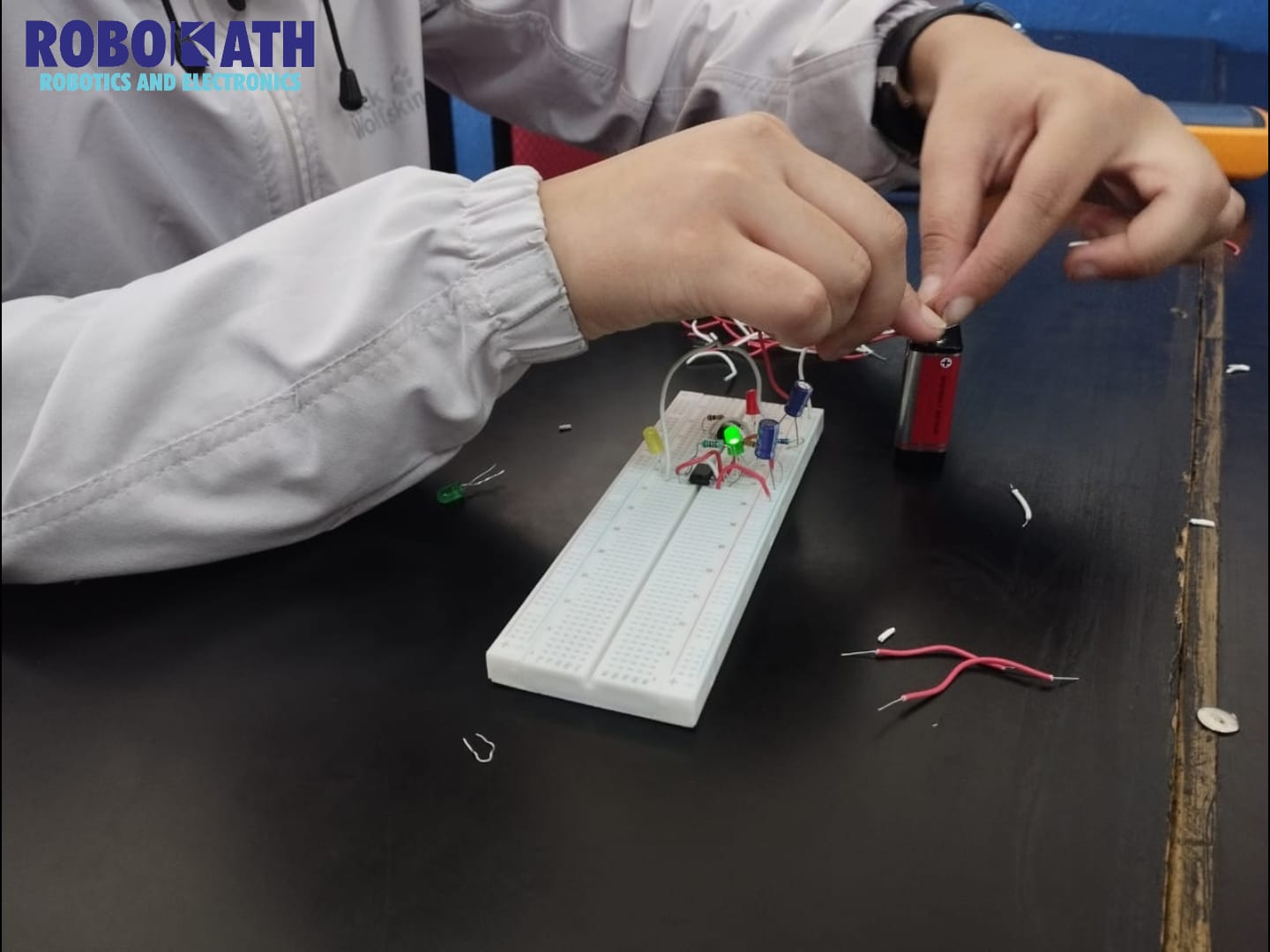
For example, imagine you enjoy writing code but are especially excited when that code interacts with a sensor, robot, microcontroller or communication device. The career scope of electronics engineering may be more relevant to your interests than you initially realized. Kathford’s RoboKath student community works in areas including robotics, Arduino microcontrollers, electronic circuit design, drones, IoT, Raspberry Pi, image processing, machine learning and wireless technology.
That combination represents a world where software and physical systems increasingly interact.
So take the IOE Entrance result seriously, but do not turn it into a verdict about your future. It determines some immediate admission choices. What happens after admission depends on what you learn and how deliberately you use your engineering years.
Part 3: BE Computer vs BE Electronics — The Alternative Many Students Overlook
The BE Computer vs BE Electronics comparison becomes especially useful when BE Computer was your first choice but Electronics, Communication and Information Engineering is available. Many Nepali students understand Computer Engineering relatively easily because words such as software, AI, coding and cybersecurity are already familiar. Electronics Engineering is sometimes imagined narrowly as circuits, wires and telecommunications. Modern BE Electronics in Nepal, however, reaches much further.
Kathford describes its Electronics, Communication and Information Engineering program around electronics and communication foundations combined with modern technological applications. Its supplied learning model identifies programming, hardware-software co-design, real-time operating systems, IoT, cloud computing, data analytics, AI and machine learning, database systems, cybersecurity and networking among the professional learning areas.
This creates an interesting position between the physical and digital sides of technology.
Consider a Nepali student who says, “I wanted Computer Engineering because I want to work with AI.” That sentence alone does not establish that Computer Engineering is the only relevant pathway. What does the student mean by AI? Do they want to develop software models? Do they want to integrate intelligence into robots? Do they want smart sensors to collect information and make automated decisions? Are they fascinated by autonomous devices or intelligent communication systems?
The answers can change the BE Computer vs BE Electronics conversation.
Kathford’s BE Computer materials describe AI-driven curriculum, cybersecurity, embedded systems, cloud computing and intelligent technologies. Meanwhile, its Electronics materials describe AI and machine learning in connection with data analytics, signals, embedded systems and modern electronic applications.
The difference is therefore not simply “Computer has AI; Electronics does not.” Both can interact with emerging technology, but they approach technical problems from different foundations.
Suppose a student builds a smart agriculture system for a Nepali farm. Sensors measure soil conditions, a microcontroller collects readings, a communication module sends the data, software processes it, and an intelligent model helps decide when irrigation is required. Where exactly does “computer” end and “electronics” begin in such a project?
That is precisely why BE Electronics in Nepal can be interesting.
The student may need programming, electronic circuits, sensors, embedded systems, communication, IoT and data analysis within the same solution. This interdisciplinary territory is one reason the career scope of electronics engineering should be considered through modern applications rather than old stereotypes.
BE Computer remains distinct and may still be your preferred program. But if you do not receive the seat, BE Electronics deserves investigation before you conclude that your technology plan is over.
Part 4: BE Electronics in Nepal — How Close Is It to Modern Computing?
Students considering BE Electronics in Nepal after missing BE Computer often ask one practical question: “Will I still get to code?”
At Kathford, the supplied Electronics, Communication and Information Engineering learning model explicitly includes Python, Java and JavaScript within its professional skills structure. It also includes real-time operating systems, IoT, cloud computing, data analytics and AI and machine learning. So programming is not disconnected from this engineering pathway.
The important distinction is what programming is being used to accomplish.
In BE Computer, programming sits close to the center of many academic areas. Kathford’s Computer Engineering model covers software development principles, databases, computer architecture, data structures, networking, cloud computing, AI and machine learning, cybersecurity and automation.
In Electronics, Communication and Information Engineering, programming increasingly becomes a bridge between electronics and intelligent systems. Code can interact with microcontrollers, sensors, communication systems, IoT devices, automation and data.
Imagine a student in Lalitpur who initially wanted BE Computer because they enjoyed Python. During an electronics project, they connect a Raspberry Pi to sensors and write Python code to collect and process information. Later, they connect the device to a network and experiment with machine learning on the collected data. The student is still coding, but the code now interacts directly with the physical world.
That distinction captures an important part of BE Computer vs BE Electronics.
Kathford’s student environment provides a concrete example through RoboKath. The college describes RoboKath as a robotics research and development body that trains students through robotics, Arduino microcontrollers, electronic circuit design, line-tracking robots, drones, IoT, Raspberry Pi, image processing, machine learning and wireless technologies. A recent RoboKath and KathFOSS orientation also emphasized practical learning, teamwork, workshops, competitions and real technical projects.
For students fascinated by both coding and devices, this overlap can make the career scope of electronics engineering particularly interesting.
You should still recognize the academic differences. If your interests are overwhelmingly software-oriented and you dislike circuits, electronics and physical systems, choosing Electronics merely because it contains programming would be a poor interpretation of the program. But if you enjoy understanding how software communicates with hardware and how intelligent systems operate in the physical world, BE Electronics in Nepal deserves much more consideration.
Not getting BE Computer in Nepal may therefore reveal a technical field you had not seriously explored before.
Part 5: BE Computer vs BE Electronics — Software, Hardware, AI and IoT Compared
The easiest way to understand BE Computer vs BE Electronics is not to ask which program is “better.” Instead, ask what kinds of problems each program prepares you to understand.
BE Computer in Nepal sits strongly around computing systems. Kathford’s Computer Engineering goals include software development, hardware design, computer architecture, data structures, operating systems, networking, cybersecurity, database management, system analysis and project management. Its current program page also highlights AI, IoT, cybersecurity, embedded systems and cloud computing.
BE Electronics in Nepal begins from a different foundation. Kathford’s learning model identifies electronic system design, digital systems, networking, automatic systems, digital signal analysis and communication system design as foundational areas. It then extends into programming, IoT, cloud computing, AI and machine learning, cybersecurity, database tools and hardware-software co-design.
That difference becomes clearer through an example.
Imagine a team creating a smart traffic monitoring system for Kathmandu. Cameras and sensors collect information. Electronic components and embedded devices handle signals. Communication systems transmit data. Software stores and processes information. AI models may identify traffic patterns. A dashboard may display results.
A Computer Engineering student could contribute significantly to such a project. So could an Electronics, Communication and Information Engineering student. Their academic strengths may lead them toward different layers of the system.
This is where IoT makes the BE Computer vs BE Electronics relationship particularly interesting. IoT exists precisely because hardware, communication and software must work together. A smart device without software has limited intelligence. Software without sensors or connected hardware cannot directly observe many physical conditions. Communication technologies connect those layers.
Kathford’s Electronics materials specifically highlight IoT, embedded systems, intelligent devices and AI-related applications. The college also lists a Basic Electronics Workshop among its recent events, demonstrating hands-on activity around fundamental electronics.
For a student disappointed by an IOE Entrance outcome, therefore, the question becomes more precise. Were you interested in Computer Engineering because everyone said computers have “scope,” or because you genuinely want to concentrate on computing systems? If your interests include robotics, sensors, embedded devices, communication, automation and IoT alongside programming, BE Electronics in Nepal may align more closely with your interests than you first assumed.
The career scope of electronics engineering grows clearer when you stop thinking of electronics as isolated circuits and begin thinking about connected, programmable and intelligent systems.
Part 6: Career Scope of Electronics Engineering — Can BE Electronics Still Lead to Tech Careers?
The career scope of electronics engineering is often misunderstood by students who originally planned for Computer Engineering. Some imagine that choosing Electronics means giving up software, AI, cybersecurity or other modern technology areas. Kathford’s own program framework shows why that assumption is too narrow.
Its Electronics, Communication and Information Engineering model includes programming, IoT, cloud computing, data analytics, AI and machine learning, databases, cybersecurity, networking, embedded technologies and design and prototyping alongside the program’s electronics and communication foundations. The supplied four-year program material also emphasizes AI-powered signal processing, IoT and embedded AI systems, cybersecurity and wireless technologies, robotics, VLSI, FPGA-related work and smart devices.
This creates several directions for technical development, but students should think in terms of capabilities rather than assuming that a degree automatically guarantees a particular job.
Consider a student who enters BE Electronics in Nepal after missing their preferred IOE Entrance seat. During the first year, they develop engineering and electronics foundations. Later, they become interested in microcontrollers and IoT. They participate in robotics activities, improve their Python skills, learn networking, build an embedded project and eventually explore machine learning for sensor data.
Their final profile is no longer simply “a student who did not get Computer Engineering.” It is the profile of someone who has deliberately developed expertise around connected intelligent systems.
That is also consistent with Kathford’s broader AI and Innovation Lab proposal. The supplied proposal describes an interdisciplinary environment intended for students across Engineering, IT and Management, with areas including AI/ML, Python, PyTorch, TensorFlow, data tools, Git, Docker, deployment tools, robotics, IoT and hardware prototyping. The proposal explicitly positions AI learning as interdisciplinary rather than restricted to Computer Engineering students.
For someone comparing BE Computer vs BE Electronics, this matters. Emerging technology increasingly combines disciplines. Robotics combines software, electronics and mechanical systems. IoT combines sensors, embedded computing, networks and cloud services. Intelligent devices can combine signal processing with machine learning. Cybersecurity applies to both conventional computer networks and connected devices.
None of this means BE Electronics in Nepal should be chosen simply as a substitute whenever BE Computer is unavailable. You still need an interest in electronics, signals, communication and hardware-oriented engineering. But if those areas genuinely interest you, the career scope of electronics engineering can connect naturally with many technologies that originally attracted you to BE Computer in Nepal.
Your original plan may have been “I must get BE Computer.” A more useful plan can become: “I want to build intelligent technology, and I need to understand which engineering path fits the kind of technology I want to build.”
That is a much stronger question to carry into the second half of the decision.
Part 7: BE Electronics in Nepal — Programming Is Still Part of the Journey
One of the biggest concerns students have about BE Electronics in Nepal is programming. A student who originally wanted BE Computer in Nepal may assume that moving to Electronics means moving away from coding and toward four years dominated only by circuits and communication theory. That picture is incomplete. Electronics, Communication and Information Engineering certainly has a stronger electronics foundation than Computer Engineering, but modern electronics also depends heavily on computing, programming and software-controlled systems.
Kathford’s learning model for Electronics, Communication and Information Engineering reflects this relationship. Its professional skills areas include programming languages such as Python, Java and JavaScript alongside hardware-software co-design, real-time operating systems, IoT, cloud computing, data analytics, AI and machine learning, database tools, cybersecurity, networking protocols, and design and prototyping. The important point in the BE Computer vs BE Electronics comparison is therefore not whether Electronics students encounter programming. They do. The more useful question is how programming connects with the rest of their engineering education.
Consider a student who wanted BE Computer because they enjoyed writing Python programs during +2. If that student enters Electronics, they may initially worry that their programming interest has been pushed aside. But imagine that they later work with a Raspberry Pi, collect information from sensors, process that information through code, connect the device to a network and build an automated response. Programming has not disappeared. Instead, it has become one component of a larger physical system.
That relationship is particularly important in embedded systems. Many everyday devices contain computing capability without looking like conventional computers. Smart appliances, industrial controllers, monitoring systems, communication equipment, robots and IoT devices all depend on combinations of electronics, processors, communication and software.
Kathford’s supplied four-year BE Electronics material describes this progression through areas such as Python for scientific computing, Raspberry Pi projects, microprocessors, Linux shell scripting, IoT challenges, machine learning for signal processing, embedded systems, antennas and VLSI-related learning. This is also consistent with Kathford’s description of its Computer and Electronics, Communication and Information Engineering department, where Electronics is associated with embedded systems, telecommunications and IoT while Computer Engineering focuses more directly on hardware and software systems, programming, AI and system development.
The difference matters. A student should not choose BE Electronics in Nepal while expecting the exact same academic experience as BE Computer. If you dislike electronics, circuits and communication systems and want almost all of your attention to remain on software, you need to acknowledge that honestly. But if you enjoy coding and also want to understand how that code interacts with electronic devices and communication systems, the program can offer an interesting engineering direction.
Therefore, missing your IOE Entrance preference does not automatically mean leaving programming behind. It may mean learning to use programming in a different engineering context. For the right student, that difference can become an opportunity rather than a compromise.
Part 8: BE Computer vs BE Electronics — Robotics, IoT and Embedded Systems Change the Comparison
The BE Computer vs BE Electronics comparison becomes much more interesting when robotics, IoT and embedded systems enter the picture. These technologies do not fit neatly into a world where software and electronics are treated as completely separate disciplines. A robot needs physical electronic components, sensors, processors and often communication capabilities, but it also needs software. An IoT device needs hardware to interact with the physical world, communication technology to exchange information and software to process that information.
This overlap is one reason students considering BE Electronics in Nepal should think carefully about what kind of technology excites them.
Imagine a +2 graduate from Kathmandu who wanted BE Computer in Nepal because they watched robotics competitions online and wanted to “build robots.” After the admission process, BE Computer is unavailable but BE Electronics is an option. Initially, the student sees Electronics as the unrelated second choice. But when they describe what they actually want to do—work with sensors, program microcontrollers, build robots and connect devices—the relationship becomes much clearer.
Kathford’s Electronics learning framework specifically includes IoT, hardware-software co-design, programming, real-time operating systems, networking, cloud computing, AI and machine learning, and design and prototyping skills. Its four-year Electronics material also describes Raspberry Pi projects, robotics activities, PCB design and fabrication, IoT challenges, embedded systems and machine-learning applications.
Kathford’s broader AI and Innovation Lab proposal reinforces the interdisciplinary nature of this work. The proposed hardware prototyping area includes Raspberry Pi and Arduino kits and is intended for robotics, IoT and AI integration. The proposal also describes AI/ML tools, development environments, deployment technologies and capstone-style applications, with students from Engineering, IT and Management identified among the beneficiaries.
Now imagine a student project designed around Kathmandu’s air-quality problem. Sensors could collect environmental information. A microcontroller could read the sensors. Communication technologies could transmit measurements. A cloud service could store the information. A machine-learning model could examine patterns, while a dashboard could communicate the results. This single project crosses electronics, communication, computing and AI.
For a student attracted to this type of problem, the career scope of electronics engineering starts to look very different from the stereotype of repairing electronic devices or studying circuits in isolation.
The same principle applies to robotics. The electronics engineer may need to understand sensors, embedded processors, communication, circuit design and physical interfaces while also using programming to control the system. Computer Engineering can also lead into robotics and IoT, particularly from the computing, software and embedded-system side. The two fields overlap without becoming identical.
That is the useful way to interpret BE Computer vs BE Electronics. Instead of asking which degree is universally superior, identify which layer of technology makes you curious. If you want to understand intelligent physical devices, communication, sensors and embedded computing, BE Electronics in Nepal deserves serious attention.
Sometimes not getting your first IOE Entrance preference forces you to investigate a field that was already closer to your interests than you realized.
Part 9: Career Scope of Electronics Engineering — AI, Cybersecurity and Communication Technologies
The career scope of electronics engineering should be understood in the context of technologies that increasingly depend on connected devices, digital communication, embedded computing and intelligent systems. For a student who initially wanted BE Computer in Nepal, AI and cybersecurity are particularly important because these subjects are often assumed to belong exclusively to Computer Engineering or computer science. The actual academic landscape is more interconnected.
Kathford’s Electronics learning model includes data analytics tools, AI and machine learning, cybersecurity and privacy, cloud computing, database systems, networking and communication protocols alongside the program’s electronics foundation. Its program material further describes machine learning for signal and image analysis, IoT and embedded AI systems, secure protocols, wireless communication, robotics and smart devices.
The reason becomes clearer when we think about how modern systems operate.
Take cybersecurity. A student may initially associate cybersecurity only with laptops, servers and websites. But connected physical devices also need protection. IoT sensors, routers, embedded devices, wireless networks and industrial control systems can all exchange data and participate in networks. Understanding communication protocols and hardware therefore creates another perspective on security.
AI offers a similar example. Artificial intelligence is often imagined as chatbots or software running on powerful computers. But AI can also interact with signals, images, sensors and embedded devices. A smart monitoring system might collect sensor data and use machine learning to identify unusual patterns. A communication application might process signals intelligently. A robotics project might use image processing or machine learning to interpret its surroundings.
This is one reason Kathford’s proposed AI and Innovation Lab is designed as an interdisciplinary space rather than a facility limited to one program. The proposal identifies students from Engineering, IT and Management among its beneficiaries and describes AI, machine learning, hardware prototyping, IoT, research and interdisciplinary projects among its intended activities.
For a Nepali student, this can change how the BE Computer vs BE Electronics decision is understood. Suppose your long-term interest is intelligent devices rather than purely software-based AI. You want to create a system that monitors landslide conditions, an agricultural sensor network, a smart energy meter or an automated industrial device. Those problems involve software, but they also involve the physical collection and transmission of information.
Kathford itself describes BE Electronics in Nepal as developing expertise in electronics, embedded systems, telecommunications and IoT. Its program is one of the three engineering options currently listed by the college alongside BE Computer and BE Civil.
Students should still avoid interpreting this as a promise that every Electronics graduate automatically becomes an AI engineer or cybersecurity professional. A degree provides foundations and structured learning; specialization still requires deliberate skill development, projects and experience.
That is the central lesson about the career scope of electronics engineering. The field can intersect with AI, cybersecurity and modern computing, but students need to build toward those intersections intentionally.
Part 10: IOE Entrance — How to Explain BE Electronics to Your Family
An unexpected IOE Entrance outcome is rarely an individual decision in Nepal. Parents, siblings and relatives often participate heavily in undergraduate choices because a four-year engineering education represents a major commitment of money, time and family expectations. When you tell your family that you are considering BE Electronics in Nepal instead of Computer Engineering, you may therefore hear questions such as, “Electronics padhesi k garne?” or “Computer napayera Electronics padhna lageko?”
The most useful response is not to argue that the two programs are identical. They are not. Explain the relationship accurately.
You can tell your family that BE Computer vs BE Electronics involves two engineering pathways with different academic emphasis but meaningful overlap in modern technology. Computer Engineering focuses strongly on computing systems, programming, software, architecture, networking and related technologies. Electronics, Communication and Information Engineering focuses more strongly on electronic systems, communication, signals and embedded technologies while also incorporating programming, IoT, networking, cloud technologies, AI/ML and cybersecurity within its broader learning framework. Kathford’s own academic materials document these areas.
Then connect the degree to your own interests.
Suppose you tell your parents, “I wanted Computer because I like technology. But the parts I actually enjoy are robotics, IoT, hardware, programming and intelligent devices. Electronics includes those areas, so I want to understand the curriculum before deciding.” That is a much stronger explanation than saying, “Computer payena, Electronics matra baki cha.”
The second conversation should be about admission reality. Kathford’s current process states that engineering applicants need the relevant +2 Science/PCL eligibility and must pass the IOE entrance examination. After passing, students submit their engineering priorities, and Kathford states that students selected for a program different from their first preference can discuss their options with the college before confirming admission.
This is useful because the family can evaluate an actual option rather than making a decision from assumptions.
The third conversation should concern finances. Engineering is a four-year commitment, so tuition, scholarships, transport, accommodation where applicable, devices and other study expenses need to be considered together. Kathford currently states that its Full Scholarship and Merit Scholarship for engineering are linked to IOE entrance performance, with additional scholarship categories listed on its program information. Students should verify the scholarship and fee conditions applicable to their own admission year directly rather than assuming previous arrangements remain unchanged.
Most importantly, do not try to convince your family that BE Electronics in Nepal is secretly BE Computer. Explain why the actual program fits you.
The IOE Entrance result may have changed the first plan. Your next responsibility is to show that the second plan is researched rather than impulsive. A family may initially react to an unfamiliar degree name, but a conversation about curriculum, interests, costs and future skill development is much more productive than a conversation based only on disappointment.
Part 11: BE Computer in Nepal — Choose Skills and Interests, Not Just a Popular Degree Name
The popularity of BE Computer in Nepal can create a powerful psychological effect. When many classmates want Computer Engineering, when technology careers receive attention online, and when families repeatedly hear about software and AI, the program name can begin to feel like the goal itself. But a four-year engineering degree should ideally be selected according to what you are prepared to study deeply, not only according to what currently sounds attractive.
Kathford’s Computer Engineering framework provides a useful example. Students are expected to develop knowledge across software development, hardware design, computer architecture, data structures, operating systems, networking, cybersecurity, databases, systems and project management. Therefore, even BE Computer in Nepal is much broader than simply learning to code and getting a software job.
The same applies to BE Electronics in Nepal. Its academic structure involves electronics, communication systems, signals and engineering principles alongside programming and emerging technologies. A student choosing Electronics only because Computer was unavailable, while strongly disliking circuits and hardware, could spend four years frustrated. A student fascinated by embedded systems, robotics, IoT and communication may experience the same program very differently.
Consider two Nepali students.
The first says, “I want Computer because everybody says Computer has scope.” The second says, “I enjoy programming, but I also like understanding circuits and sensors. I want to build connected devices and experiment with robotics and IoT.”
If both students miss their IOE Entrance preference, Electronics should not automatically mean the same thing to both of them. The second student has interests that clearly intersect with the program. The first student needs to investigate further before making a decision.
That is why practical exposure matters. Kathford’s academic philosophy describes a student-centered learning approach that extends beyond lectures through active, problem-based, project-based and experiential learning. Its BE Electronics program description similarly presents Electronics as a field involving modern technological applications rather than theory alone. Explore Kathford’s BE Electronics program
The broader career scope of electronics engineering should also be approached this way. Do not begin with a job title and assume the degree automatically delivers it. Begin with foundational capability. Can you program? Can you understand electronic systems? Can you work with communication technologies? Can you design and test something? Can you analyze a technical problem? Can you collaborate? Can you document your work?
Those abilities accumulate across semesters.
So if you do not get BE Computer in Nepal, avoid making the next decision purely from fear of losing a popular degree. Study the curriculum. Talk with faculty and current students. Look at labs and projects. Understand what Electronics students actually build. Then ask yourself whether you can imagine spending four years becoming good at those things.
A degree title may help describe your academic background. The skills you develop determine much more of what you can actually do with it.
Part 12: BE Computer vs BE Electronics — What Should You Do If You Don’t Get BE Computer?
The final BE Computer vs BE Electronics decision should return to the student rather than the pressure surrounding the student. Your entrance rank matters. Available seats matter. Family finances matter. College environment matters. But after considering those realities, you are still the person who will attend the classes, complete the labs, struggle through difficult subjects, build projects and eventually decide which technical direction deserves your energy.
If you do not get BE Computer in Nepal, start by identifying why you wanted it.
If the answer is simply, “Because Computer has scope,” you need more information before selecting either program. If your answer involves software systems, computer architecture, operating systems, databases and computing itself, your preference for Computer Engineering has a clear academic basis. If your answer involves robotics, smart devices, IoT, sensors, communication systems, embedded computing and combining code with physical technology, BE Electronics in Nepal may deserve much more attention.
Kathford’s published descriptions illustrate this distinction. Computer Engineering emphasizes hardware and software systems and areas such as programming, AI and system development, while Electronics, Communication and Information Engineering emphasizes electronics, embedded systems, telecommunications and IoT. Both sit within Kathford’s Department of Computer and Electronics, Communication and Information Engineering and are presented with practical learning through labs, projects and industry-related exposure.
The supplied academic models add more detail. Computer Engineering includes software development, computer architecture, databases, networking, cybersecurity, cloud computing and AI/ML. Electronics includes programming, IoT, hardware-software co-design, cloud computing, AI/ML, networking and cybersecurity alongside its electronics, signals and communication foundations.
Think again about the student who began this journey believing there was only one acceptable outcome: BE Computer. After the IOE Entrance result, that student could spend weeks thinking, “I missed my future.”
A better response is to investigate what future they were actually trying to build.
Perhaps they discover that they genuinely need the Computer Engineering pathway and decide to explore available Computer Engineering admission options carefully. Perhaps they discover that robotics and IoT were always the most exciting parts of technology for them and BE Electronics in Nepal makes sense. Either way, the decision becomes intentional.
Kathford’s current engineering admissions page also shows that students rank Civil, Computer and Electronics through the priority process and may discuss their options if selected for a program other than their first preference. That makes the period after the entrance result a useful time for informed comparison rather than panic.
The career scope of electronics engineering should similarly be viewed as something you build through academic foundations, projects, practical skills and later specialization. Choosing Electronics does not automatically guarantee a career in AI, robotics, IoT or cybersecurity. But its combination of electronics, communication and computing-related technologies can provide foundations from which motivated students explore these areas.
Your original plan can change without your larger ambition disappearing.
You May Also Explore
If you are comparing your engineering options after the entrance result, explore Kathford’s BE Electronics, Communication and Information Engineering program alongside the BE Computer Engineering program. For a broader comparison, Kathford has also published 7 Best and Easy Tips to Choose Between BE Computer vs BE Civil vs BE Electronics. Students interested in practical communities can explore Kathford’s student clubs and activities, while applicants can follow the latest engineering admission notices before making an admission decision.
Conclusion
Not getting BE Computer in Nepal can hurt, particularly when you have spent months preparing for the IOE Entrance process and imagining yourself as a Computer Engineering student. But disappointment should not make the next decision for you.
The most important lesson from the BE Computer vs BE Electronics comparison is that these are different engineering pathways with areas of meaningful technological overlap. Computer Engineering approaches technology strongly through computing systems, software and hardware integration. BE Electronics in Nepal begins more deeply with electronics, communication, signals and embedded systems while also extending into programming, IoT, networking, cloud computing, AI/ML and cybersecurity.
For some students, Computer Engineering will remain the better match for their interests. For others, investigating Electronics may reveal that their real interests were never limited to computers in the first place. They wanted to build robots, connect devices, work with sensors, understand communication systems, combine code with hardware or explore intelligent physical systems.
That is why the career scope of electronics engineering should be understood through what the field actually teaches and what you deliberately build on top of that foundation.
You are not choosing only a degree name. You are choosing what kinds of problems you want to spend the next four years learning to solve.
If BE Computer does not work out, investigate before you panic. Read the curricula. Understand BE Computer vs BE Electronics properly. Visit the college. Ask about labs and projects. Discuss the admission situation with your family. Look at the technologies that genuinely hold your attention.
Your first preference can change.
Your interest in becoming an engineer does not have to.
FAQ: What should I do if I don’t get BE Computer Engineering in Nepal?
If you do not get BE Computer in Nepal, first identify why you wanted the program. Students interested in robotics, embedded systems, IoT, communication, electronics and programming should investigate BE Electronics, Communication and Information Engineering before assuming that their engineering plan has ended.
FAQ: Is BE Electronics a good alternative if I don’t get BE Computer?
BE Computer vs BE Electronics should be compared according to your interests rather than treating one as a universal replacement for the other. BE Electronics can be particularly relevant for students interested in electronics, embedded systems, IoT, robotics, communication technologies and hardware-software integration.
FAQ: Does BE Electronics include programming?
Yes. Kathford’s Electronics, Communication and Information Engineering learning model includes programming languages such as Python, Java and JavaScript along with IoT, cloud computing, AI and machine learning, cybersecurity and networking.
FAQ: Can BE Electronics students study AI and machine learning?
AI and machine learning appear within Kathford’s BE Electronics learning framework, alongside data analytics and other emerging technologies. Students interested in AI should still develop the necessary mathematics, programming, projects and specialization rather than assuming the degree alone creates AI expertise.
FAQ: What is the main difference between BE Computer and BE Electronics?
In Kathford’s academic framing, Computer Engineering emphasizes computing hardware and software systems, programming and system development, while Electronics, Communication and Information Engineering emphasizes electronics, embedded systems, telecommunications and IoT. Both include areas that intersect with modern computing technologies.
FAQ: Do I need to pass the IOE entrance exam for BE Electronics at Kathford?
Yes. Kathford’s current admission information states that Engineering applicants must meet the +2 Science/PCL academic requirements and pass Tribhuvan University’s IOE Entrance Examination.
See more articles like this


A safe rank for engineering is one of the first things Nepali students start searching for after the IOE entrance result, especially when comparing...

Choosing to study management after +2 is an exciting step, but many students ask one important question: How difficult is the BBA or BBM...

Choosing engineering courses in Nepal is one of the biggest academic decisions many students make after +2 Science. Every year, thousands of Nepali students...