

12 Reasons Why Successful Engineers Come from All Branches
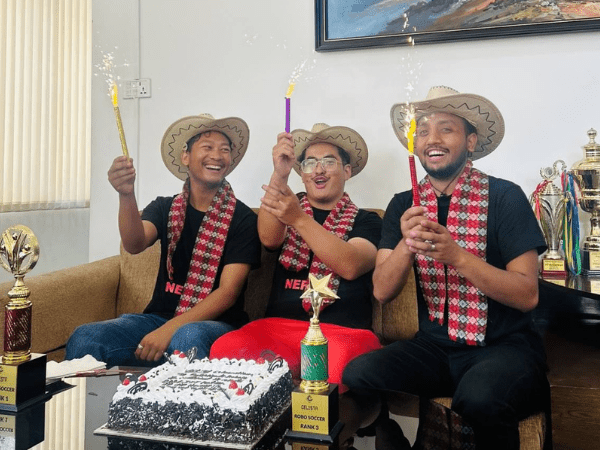
Successful engineers from all branches prove that engineering success is not decided by whether a student chooses Civil Engineering, Computer Engineering, or Electronics Engineering; it is shaped by what that student learns to solve, build, communicate, and improve over time. For Nepali students finishing +2 Science, however, choosing an engineering branch in Nepal can feel like choosing an entire future at eighteen. Friends may insist Computer is the future, relatives may recommend Civil for stability, while someone else may say Electronics offers the widest technical foundation. These comparisons can make students forget something more important: every branch develops a different way of solving real problems. The real engineering career scope in Nepal therefore extends beyond a degree title. Students who develop practical engineering skills and understand the growing importance of interdisciplinary engineering can create meaningful careers from very different starting points. Kathford’s engineering learning models reflect this broader idea: Civil, Computer, and Electronics programs differ technically, but all emphasize analytical thinking, problem-solving, communication, teamwork, practical application, and professional development.
Table of Contents
Part 1: Successful Engineers from All Branches Start with the Same Core Mindset
Part 2: Engineering Branch in Nepal Is a Starting Point, Not a Career Boundary
Part 3: Practical Engineering Skills Turn Civil Engineering Knowledge into Real Solutions
Part 4: Successful Engineers from All Branches Learn More Than Their Syllabus
Part 5: Interdisciplinary Engineering Is Changing Computer and Electronics Careers
Part 6: Engineering Career Scope in Nepal Depends on Skills as Much as Specialization
Part 7: Successful Engineers from All Branches Build Communication and Teamwork
Part 8: Practical Engineering Skills Grow Through Projects, Labs, and Failure
Part 9: Engineering Branch in Nepal Matters Less When Technology Starts to Converge
Part 10: Interdisciplinary Engineering Creates New Career Paths for Nepali Students
Part 11: Engineering Career Scope in Nepal Expands Through Lifelong Learning
Part 12: Successful Engineers from All Branches Build Their Own Definition of Success
Part 1: Successful Engineers from All Branches Start with the Same Core Mindset
Successful engineers from all branches may work on completely different problems, but the thinking behind their work has more in common than many students initially realize. A Civil Engineering student may be calculating structural loads, a Computer Engineering student may be debugging a software system, and an Electronics Engineering student may be testing a communication circuit. The technical knowledge is different, yet each student must learn to identify a problem, understand its constraints, test possible solutions, interpret results, and improve the solution when something does not work. That problem-solving mindset is one of the strongest foundations of practical engineering skills.
This matters when choosing an engineering branch in Nepal because students are often encouraged to think about branches as a hierarchy. Conversations after +2 can quickly become comparisons about which degree has more jobs, which sounds more prestigious, or which may produce a higher salary. Kathford itself addresses a similar question in its discussion of engineering future scope, noting that no engineering branch is universally best for every student and that interests, adaptability, skills, goals, and continuous learning influence long-term outcomes. That perspective changes the question from “Which branch guarantees success?” to “What kind of problems do I want to become capable of solving?”
Consider three students studying in Kathmandu. One enjoys observing roads, buildings, drainage systems, and construction sites. Another spends free time experimenting with code and computers. A third is fascinated by sensors, circuits, wireless devices, and automation. Asking all three to choose the same engineering branch in Nepal simply because that branch is currently popular would ignore their different strengths. Their technical journeys can be different without one journey automatically becoming less valuable.
Kathford’s branch-specific learning models make this distinction clear. Its Civil Engineering goals include design, engineering tools, environmental and social responsibility, analytical thinking, communication, and teamwork. Its Computer Engineering model similarly includes experimentation, emerging tools, analytical problem-solving, collaboration, communication, and career development. Electronics and Communication Engineering includes modern engineering tools, analytical problem-solving, teamwork, communication, and lifelong learning.
These similarities matter. They suggest that successful engineers from all branches are not produced by memorizing different sets of formulas alone. They emerge when technical knowledge is combined with judgment, curiosity, collaboration, adaptability, and practical engineering skills.
For a Nepali student deciding what to study, this is reassuring but also demanding. Choosing the right branch matters, yet choosing a branch is only the beginning. The larger engineering career scope in Nepal opens when students learn how to use their specialization rather than merely complete it. That foundation leads to the next important realization: a degree gives you a starting point, not a permanent professional boundary.
Part 2: Engineering Branch in Nepal Is a Starting Point, Not a Career Boundary
Choosing an engineering branch in Nepal feels permanent when you are filling out an admission form. At eighteen or nineteen, “BE Civil,” “BE Computer,” or “BE Electronics” can look like a label that will follow you for the rest of your professional life. The reality is more flexible. Your branch establishes important technical foundations, but careers develop through projects, tools, industries, interests, additional learning, and opportunities that may not exist when you first enter college.
That flexibility is becoming particularly important because interdisciplinary engineering is changing what traditional branches actually do. Civil Engineering is no longer isolated from computing and data. Computer Engineering is not restricted to writing software. Electronics Engineering increasingly overlaps with programming, networking, artificial intelligence, embedded systems, cybersecurity, cloud technologies, and automation. The boundaries remain academically meaningful, but real engineering problems regularly cross them.
Kathford’s current program information illustrates these different foundations. Its engineering offerings include Bachelor of Civil Engineering, Bachelor of Computer Engineering, and Bachelor of Electronics, Communication and Information Engineering. The associated learning material describes Civil Engineering through infrastructure, structural analysis, geotechnical engineering, labs, projects, internships, and emerging tools. Computer Engineering combines programming and computing foundations with areas such as machine learning, networking, cybersecurity, cloud systems, and embedded systems. Electronics, Communication and Information Engineering connects electronics and communications with IoT, embedded systems, signal processing, programming, and emerging intelligent technologies.
Imagine a Civil Engineering student in Nepal who initially thinks the career means only working on a construction site. During college, that student becomes interested in GIS, infrastructure data, structural modelling, or technology-assisted project management. The original engineering branch in Nepal has not become irrelevant. Civil knowledge provides the context that makes those additional tools useful. Similarly, a Computer Engineering graduate might eventually work with embedded devices rather than conventional application development, while an Electronics graduate could move toward IoT, automation, networking, or software-oriented work.
This is where practical engineering skills become career bridges. A student who knows only what appeared in an examination may find transitions difficult. A student who has built projects, learned new tools, worked in teams, communicated technical decisions, and learned independently has more ways to respond when industries change.
The same principle shapes engineering career scope in Nepal. “Scope” is sometimes discussed as though the market assigns one fixed future to each degree. In practice, scope also depends on what a graduate can do with that foundation. Nepal needs infrastructure expertise, digital systems, communication technologies, automation, software, data capabilities, and engineers who can connect these areas.
Therefore, successful engineers from all branches do not necessarily remain inside narrow professional boxes. They retain their technical foundations while developing adjacent capabilities. That is the essence of interdisciplinary engineering: not abandoning your branch, but learning how your branch connects with a larger problem.
Part 3: Practical Engineering Skills Turn Civil Engineering Knowledge into Real Solutions
Practical engineering skills are especially easy to understand through Civil Engineering because the consequences of engineering decisions eventually become physical. A drawing becomes a structure. Survey data informs a site decision. Material calculations influence construction. Transportation analysis affects movement. Water-resource decisions influence communities. The student therefore has to move from understanding concepts to applying them responsibly.
Kathford’s Civil Engineering learning model explicitly describes this progression. The program goals cover structural analysis, geotechnical engineering, transportation engineering, environmental engineering, water-resource management, construction technology, modern engineering tools, sustainable solutions, analytical thinking, communication, and teamwork. The model also connects classroom instruction with laboratory work, field sessions, design activities, capstone projects, and internships. These are important examples of why successful engineers from all branches need more than theoretical recall.
Picture a Civil Engineering student studying surveying in Kathmandu. Reading about surveying principles is necessary, but the learning changes when the student has to work with a team, take measurements, notice inconsistencies, record data accurately, account for site conditions, and explain the result. Suddenly, mathematical knowledge is interacting with equipment, communication, judgment, and responsibility. Those are practical engineering skills, and the same pattern exists in every engineering branch in Nepal.
The technological side of Civil Engineering is also expanding. Kathford’s program material discusses tools and areas including CAD, GIS, structural and infrastructure technologies, along with the use of emerging digital approaches in Civil Engineering. This is a useful example of interdisciplinary engineering. A student interested in structures does not have to stop caring about structures to learn data analysis or digital tools. Instead, those tools can strengthen the student’s ability to investigate and solve civil problems.
Student activities can reinforce the same learning. Kathford describes CESSKath, its Civil Engineering student society, as a platform for projects, workshops, industrial visits, design competitions, exhibitions, field-based research, guest lectures, and peer learning. Its website has also reported a Popsicle Bridge Competition organized by CESSKath to encourage creativity and practical application of engineering principles. Such activities demonstrate a simple principle: an engineering idea becomes more meaningful when a student has to make it work.
This matters to engineering career scope in Nepal because Nepal’s infrastructure challenges are rarely textbook-perfect. Geography, budgets, environmental concerns, urban growth, construction realities, safety requirements, and community needs interact. Engineers must therefore learn to work under constraints.
Civil Engineering is only one illustration. Computer students encounter the same reality when code fails outside a controlled exercise. Electronics students experience it when a circuit or embedded system behaves differently from a simulation. Successful engineers from all branches become stronger by closing this gap between knowing and doing. Once students recognize that, they also begin to understand why the formal syllabus cannot be the end of engineering education.
Part 4: Successful Engineers from All Branches Learn More Than Their Syllabus
Successful engineers from all branches eventually discover an uncomfortable but useful truth: completing the syllabus and becoming professionally capable are related goals, but they are not identical goals. A university curriculum gives students structured foundations. Professional life then asks them to combine those foundations with tools, communication, teamwork, judgment, self-learning, and technologies that continue changing after the examination is over.
This is particularly relevant to the engineering career scope in Nepal. A student may graduate with the same degree as dozens of classmates, yet their readiness can be very different. One may have completed only required coursework. Another may have participated in workshops, attempted projects that failed before succeeding, communicated with mentors, worked in clubs, completed an internship, explored emerging software, and learned how to present technical work. The degree title is identical, but the accumulated practical engineering skills are not.
Kathford’s broader academic philosophy supports learning beyond narrow classroom performance. Its academic framework discusses foundational literacy, professional skills, learning and innovation skills, and life and career skills, while its pedagogical approaches include active learning, problem-based learning, project-based learning, discovery-based learning, experiential learning, and case-based learning. The KLEM philosophy similarly describes education as extending beyond textbooks and lectures into real-world experiences, creativity, critical thinking, adaptability, and holistic development.
A realistic example is a first-year student entering an engineering branch in Nepal after spending much of +2 preparing for written examinations. That student may initially expect college to follow the same pattern: attend lectures, memorize enough material, pass exams, and eventually receive a degree. Then a project requires a presentation. A workshop introduces unfamiliar software. A club activity requires coordination with seniors. A prototype does not work on the first attempt. The student suddenly realizes that engineering demands a wider set of abilities.
Those experiences matter because real engineering is collaborative. A Civil engineer may need to explain a technical constraint to a client or contractor. A Computer engineer may need to understand a user’s problem before building software. An Electronics engineer may need to coordinate hardware, software, communication, and testing requirements. This is interdisciplinary engineering at a practical level: people with different expertise must understand enough of one another’s work to solve a shared problem.
Kathford’s student clubs provide examples of environments where this wider development can happen. CESSKath focuses on Civil Engineering activities, KathFOSS works around free and open-source software, and RoboKath engages students in robotics, Arduino, electronic circuit design, drones, IoT, Raspberry Pi, image processing, machine learning, and wireless technologies. These spaces do not replace formal academics. They give students additional opportunities to apply them.
Therefore, practical engineering skills should not be treated as optional extras added after graduation. They grow throughout college. The strongest engineering career scope in Nepal belongs not simply to a branch on paper but to students who keep expanding what they can actually do. That becomes even more significant when branches begin intersecting through technology.
Part 5: Interdisciplinary Engineering Is Changing Computer and Electronics Careers
Interdisciplinary engineering becomes particularly visible when Computer Engineering and Electronics, Communication and Information Engineering are placed side by side. Students sometimes assume Computer Engineering belongs entirely to software while Electronics belongs entirely to circuits and hardware. Their foundations are distinct, but modern technologies create significant points of connection through embedded systems, networking, IoT, artificial intelligence, cybersecurity, automation, cloud-connected devices, and intelligent systems.
Kathford’s Computer Engineering learning model includes software development, computer architecture, data structures, operating systems, networking, cybersecurity, databases, emerging development tools, machine learning frameworks, and embedded systems. It also emphasizes experimentation, analytical thinking, teamwork, communication, and professional development. Its Electronics, Communication and Information Engineering model includes electronic and digital systems, networking, communication systems, signal processing, microcontrollers, programming, IoT, cloud computing, data analytics, AI and machine learning, cybersecurity, and design and prototyping.
That overlap is an excellent lesson for students comparing an engineering branch in Nepal. Branches do not have to become identical for collaboration to become valuable. Consider an IoT-based monitoring system. One student may understand sensors and embedded electronics deeply. Another may be stronger in networking, software, databases, or cloud integration. Someone else may understand the physical domain where the system will be deployed. The final solution can depend on all of them.
A Nepali student could encounter a similar situation through a college robotics project. Building a robot involves more than assembling components. Someone must understand circuits and power. Someone must program the system. Sensors need to produce useful information. Mechanical limitations have to be considered. Communication may be required. Testing reveals problems that were invisible during planning. Suddenly, practical engineering skills and interdisciplinary engineering are inseparable.
Kathford’s RoboKath activities illustrate this convergence. The college describes the robotics body as engaging students in robotics research, design and development while organizing activities involving Arduino microcontrollers, electronic circuit design, line-tracking robots, drones, IoT, Raspberry Pi, image processing, machine learning, and wireless technology. The college’s proposed AI and Innovation Lab is also explicitly interdisciplinary, identifying students from Engineering, IT, and Management among its beneficiaries and proposing AI, machine learning, prototyping, robotics, IoT, collaborative work, research, and student-led innovation.
These developments expand the meaning of engineering career scope in Nepal. A Computer Engineering graduate does not necessarily have to become only a conventional software developer. An Electronics graduate does not have to remain within one traditional electronics role. Technical foundations can lead toward embedded systems, automation, AI-enabled applications, networking, cybersecurity, robotics, research, and other connected areas depending on the student’s developed capabilities.
This is another reason successful engineers from all branches remain learners. Their specialization gives them depth; curiosity gives them reach. The goal is not to know everything. It is to become strong in your own field while being capable of collaborating across boundaries. That combination increasingly shapes how engineering problems are solved.
Part 6: Engineering Career Scope in Nepal Depends on Skills as Much as Specialization
Engineering career scope in Nepal is often discussed as though it were a property permanently attached to a degree. Students hear statements such as “this branch has scope” or “that branch has no future,” and those sentences can strongly influence admission decisions. Yet career scope is better understood as an interaction between industry demand, technical specialization, individual capability, practical experience, communication, adaptability, and continuous learning.
That distinction matters because every engineering branch in Nepal responds to a different set of needs. Civil Engineering connects directly with infrastructure, construction, transportation, water systems, structural design, environmental concerns, and development. Computer Engineering connects with software, networks, intelligent systems, cybersecurity, data, cloud technologies, and digital infrastructure. Electronics and Communication Engineering connects with communication systems, embedded technologies, signals, hardware-software systems, IoT, automation, and intelligent devices. None of these needs disappears simply because another field becomes fashionable.
Kathford’s own career-oriented content makes a related argument: students should not reduce future scope to a branch name because practical ability, communication, adaptability, teamwork, and problem-solving increasingly matter alongside academic knowledge. Its current website also describes the Kathford Learning Experience Model as using curriculum mapping and Bloom’s Taxonomy to move students from foundational knowledge toward advanced skills and critical thinking, while its club activities are positioned as spaces for communication, collaboration, problem-solving, leadership, and project management.
Consider two students graduating from the same engineering branch in Nepal. Both have similar transcripts. The first student has mostly prepared for examinations. The second has also built projects, completed practical assignments, participated in a technical club, learned relevant tools, practiced presentations, sought feedback, and completed an internship or comparable industry exposure. When an employer presents an unfamiliar problem, their degree titles may be identical, but their readiness can be very different. Practical engineering skills create that difference.
Now extend the example across branches. A Civil Engineering graduate who understands modern digital tools may contribute to increasingly technology-enabled infrastructure work. An Electronics graduate who combines embedded-system knowledge with programming may explore connected devices and automation. A Computer Engineering graduate who understands hardware and real-world system constraints may work effectively on IoT or embedded applications. Interdisciplinary engineering increases possibilities without erasing specialization.
For Nepali families, this perspective can also reduce unnecessary pressure. Parents naturally worry about employment, financial security, and the considerable investment required for an engineering degree. Students naturally worry about making a decision they might regret. But trying to identify one universally safe branch can create a false sense of certainty. A more useful approach is to examine whether the student is interested enough in a field to spend years developing genuine competence in it.
Kathford currently offers Civil Engineering, Computer Engineering, and Electronics, Communication and Information Engineering among its undergraduate engineering programs, giving students distinct technical pathways rather than one definition of engineering. Students exploring those pathways can review Kathford’s engineering and undergraduate program information, while its student clubs and technical communities show how learning can extend beyond formal coursework.
Ultimately, successful engineers from all branches have one important characteristic in common: they keep converting education into capability. A branch tells you where your structured learning begins. Practical engineering skills determine how effectively you use that foundation. Interdisciplinary engineering helps you connect it with changing technologies and industries. And engineering career scope in Nepal grows when students stop treating a degree as the finish line and start treating it as the foundation on which a professional identity is built.
Part 7: Successful Engineers from All Branches Build Communication and Teamwork
Successful engineers from all branches eventually learn that technical knowledge alone cannot carry a project from an idea to a useful result. Engineering happens between people as much as it happens between equations, software, machines, materials, and drawings. An engineer may understand a problem perfectly but still struggle professionally if they cannot explain the solution, listen to another specialist, document their work, accept feedback, or coordinate with a team. For this reason, communication and teamwork should be understood as practical engineering skills, not as secondary abilities reserved for managers.
Kathford’s branch-specific learning models reflect this clearly. The Civil Engineering model includes oral and written communication as well as teamwork and interpersonal skills among its program goals. Students are expected to communicate technical information through presentations, technical reports, project documentation, and engineering drawings while also learning to collaborate within multidisciplinary teams. Computer Engineering similarly identifies oral and written communication and interpersonal collaboration as important outcomes, particularly for explaining technical concepts and working across interdisciplinary teams. Electronics and Communication Engineering follows the same pattern, connecting technical education with communication, collaboration, problem-solving, and management of team dynamics.
A realistic Nepali engineering project makes the importance of these skills obvious. Imagine a Civil Engineering graduate working on a building project in Kathmandu. The engineer may have to communicate with architects, contractors, technicians, clients, suppliers, local authorities, and workers at the construction site. Each person understands the project from a different perspective. The engineer cannot simply present a page of calculations and assume everyone will interpret it correctly. Technical information must be converted into clear decisions, drawings, instructions, reports, and conversations.
The same principle applies to other branches. A Computer Engineering student building an application may have to understand what a user actually needs before writing code. An Electronics Engineering student developing an IoT system may need to coordinate sensors, embedded hardware, communication protocols, software, and testing. This is where interdisciplinary engineering becomes a human skill as well as a technical one. Different specialists must be capable of understanding one another sufficiently to move toward the same objective.
Student communities can create useful environments for developing these abilities. Kathford describes CESSKath as a Civil Engineering student body supporting projects, workshops, industrial visits, design competitions, exhibitions, field-based research, guest lectures, and peer learning. KathFOSS organizes open-source activities, workshops, seminars, and coding competitions, while RoboKath engages students in robotics, Arduino, circuits, drones, IoT, Raspberry Pi, machine learning, and wireless technology. These activities require students to discuss ideas, divide responsibilities, present work, solve disagreements, and learn from one another.
For a student thinking about engineering career scope in Nepal, this changes what “being good at engineering” means. Academic strength remains important, but professional engineering also requires the ability to work with people whose knowledge, responsibilities, and perspectives differ from yours.
That is why successful engineers from all branches learn to communicate without losing technical accuracy and collaborate without losing individual responsibility. Your engineering branch in Nepal teaches you a technical language; your career requires you to use that language with other people. Once students begin working together on real problems, another important lesson follows naturally: some of the most valuable learning happens when a project does not work as expected.
Part 8: Practical Engineering Skills Grow Through Projects, Labs, and Failure
Practical engineering skills rarely develop through perfect first attempts. They grow when students move from knowing what should happen to discovering what actually happens. A program may fail to execute. A circuit may produce an unexpected output. Survey data may contain an inconsistency. A structural model may require revision. A prototype may work in one condition and fail in another. These moments can feel frustrating to students, but they are often where engineering thinking becomes deeper.
This is particularly important in an engineering branch in Nepal, where students can easily become focused on examinations. The pressure to pass semester exams, maintain marks, complete assignments, and satisfy family expectations can make mistakes feel like evidence of weakness. Engineering practice teaches almost the opposite lesson. A controlled failure can provide information. The engineer’s responsibility is to investigate why something failed, test assumptions, correct the design, document the learning, and avoid repeating the same mistake carelessly.
Kathford’s academic philosophy includes active learning, problem-based learning, project-based learning, discovery-based learning, experiential learning, and case-based learning among its pedagogical approaches. These approaches matter because successful engineers from all branches need opportunities to move beyond remembering information toward applying, analyzing, evaluating, and creating.
Consider a Computer Engineering student building a small embedded or IoT project. The concept may appear simple on paper: collect information from a sensor, process it, and display or transmit the result. In practice, the student can encounter incorrect wiring, unstable readings, programming errors, power issues, communication problems, or an integration failure. Solving those problems forces the student to connect several areas of knowledge. What originally looked like a small assignment becomes an exercise in interdisciplinary engineering.
The same experience occurs in Civil Engineering. A student participating in a bridge-model competition has to move beyond understanding structural concepts abstractly. Material limitations, geometry, construction quality, load distribution, teamwork, and testing suddenly matter together. Kathford’s website reports that CESSKath organized a Popsicle Bridge Competition to encourage creativity, innovation, and practical application of engineering principles. That type of activity illustrates why physical testing can reveal lessons that are difficult to experience through notes alone.
Electronics students encounter a similar process in hardware work. Kathford’s recent events include a Basic Electronics Workshop designed around hands-on learning with fundamental electronic components and circuits. RoboKath, meanwhile, is described as providing training and engagement in areas such as robotics, Arduino, electronic circuit design, IoT, Raspberry Pi, image processing, machine learning, and wireless technology.
This practical cycle—build, test, fail, understand, revise, and test again—has a direct relationship with engineering career scope in Nepal. Employers and engineering teams eventually need people who can respond when reality does not follow a textbook example. Infrastructure sites, software systems, communication networks, embedded devices, and industrial projects all introduce constraints that students cannot completely memorize in advance.
Therefore, failure during learning should not be confused with professional failure. What matters is how responsibly a student responds to it. Successful engineers from all branches become comfortable asking why something did not work and disciplined enough to investigate the answer. That habit creates practical engineering skills that remain valuable even when the technologies themselves change.
Part 9: Engineering Branch in Nepal Matters Less When Technology Starts to Converge
An engineering branch in Nepal still matters because specialization provides depth. A Civil engineer needs knowledge that a Computer engineer may never study in the same detail, while a Computer engineer requires foundations that are not central to Civil Engineering. Electronics Engineering develops another distinct body of knowledge. Yet specialization does not mean isolation. Modern engineering increasingly brings technologies and disciplines together around shared problems.
This convergence is one of the clearest reasons successful engineers from all branches can build meaningful careers. Consider a smart building. Civil engineers may contribute knowledge about structures, construction, materials, and infrastructure. Electronics engineers may work with sensors, communication systems, controllers, and embedded devices. Computer engineers may contribute software, networks, data processing, cybersecurity, or intelligent systems. The project still needs specialized engineers, but its success can depend on interdisciplinary engineering.
Kathford’s learning material reflects several of these intersections. Its Computer Engineering model includes software, hardware, networking, cybersecurity, databases, machine learning, cloud-related tools, and embedded systems. Its Electronics and Communication model connects electronics with programming, IoT, cloud computing, data analytics, AI and machine learning, cybersecurity, communication protocols, and prototyping. The Civil Engineering material likewise discusses modern engineering tools, CAD, GIS, computational approaches, projects, and real-world application alongside traditional Civil Engineering foundations.
The proposed Kathford AI and Innovation Lab provides an even clearer example. Its stated beneficiaries include students from Engineering, IT, and Management, while its proposed activities span AI, machine learning, data visualization, robotics, IoT, research, startup mentorship, prototyping, and interdisciplinary projects. The important idea for a student is not that everyone must become an AI specialist. It is that new technologies increasingly become tools that different disciplines can apply to their own problems.
Imagine a Civil Engineering student interested in transportation. Data analysis can help that student study traffic patterns. Sensors may support infrastructure monitoring. GIS can help interpret spatial information. None of these tools makes the student less of a Civil engineer. They can make the student more capable of approaching a civil problem.
Similarly, an Electronics Engineering student may learn programming because modern embedded devices require hardware and software to interact. A Computer Engineering student may need electronics knowledge while working with IoT devices. These examples show why practical engineering skills increasingly include the ability to learn outside one’s immediate comfort zone.
This convergence also changes conversations about engineering career scope in Nepal. Asking whether Civil, Computer, or Electronics will “win” in the future oversimplifies how engineering actually develops. Infrastructure becomes digital. Devices become connected. Software interacts with physical systems. Artificial intelligence becomes a tool used across domains. Cybersecurity becomes relevant wherever connected technology exists.
The better question for a Nepali student is therefore not whether branch boundaries will disappear. They will not. The better question is whether the student can develop depth in one discipline while remaining capable of learning from others.
That combination—specialization plus adaptability—is central to interdisciplinary engineering. Your branch gives you an engineering identity, but curiosity determines how widely you can apply it.
Part 10: Interdisciplinary Engineering Creates New Career Paths for Nepali Students
Interdisciplinary engineering is not simply an academic phrase. It describes a practical shift in how careers are forming. Technologies that once belonged mainly to one field are increasingly being used by others. Data analysis can support infrastructure decisions. Artificial intelligence can be applied to software, communication systems, business processes, or engineering research. IoT brings electronics, networking, programming, cloud systems, and physical environments together. This creates career possibilities that are difficult to understand if students think only in traditional job titles.
For Nepali students, this can make engineering career scope in Nepal both broader and more demanding. Broader, because graduates may discover opportunities beyond the most obvious jobs associated with their degrees. More demanding, because those opportunities often require students to continue learning after the compulsory syllabus ends.
Take an Electronics Engineering student who becomes deeply interested in IoT. The student’s knowledge of circuits, microcontrollers, communication, and embedded systems provides an important foundation. Adding programming, networking, cloud platforms, or data processing can make it possible to build complete connected systems. Kathford’s Electronics learning model specifically includes areas such as IoT, cloud computing, AI and machine learning, cybersecurity, programming, networking, and design and prototyping alongside traditional electronics and communication knowledge.
A Computer Engineering student may take a different path. Programming, architecture, data structures, networking, cybersecurity, machine learning, and embedded-system knowledge can support careers ranging from software development to intelligent systems and connected technologies. Kathford’s current BE Computer page similarly describes hands-on learning through labs, projects, and industry-relevant training while covering areas including algorithms, computer architecture, AI, IoT, and cybersecurity.
Civil Engineering also offers examples of expanding intersections. Digital modelling, GIS, data-informed planning, environmental analysis, smart infrastructure, and monitoring technologies create opportunities for students willing to combine traditional civil knowledge with emerging practical engineering skills. The core engineering identity remains Civil; the toolkit becomes wider.
This is why internships and industry exposure matter. Kathford describes its Internship & Incubation initiative as connecting academic learning with real-world application through professional experiences, with internships across engineering companies, IT firms, research organizations, and other workplaces, alongside mentorship and incubation support. A student who enters such an environment can begin seeing how classroom subjects interact inside actual projects.
A realistic Nepali example might involve a Computer Engineering student joining a company where the project requires some understanding of embedded devices. Instead of saying, “That is Electronics, so it is not my field,” the student can use existing computing knowledge and learn enough hardware context to contribute. An Electronics student joining the same project might approach it from the opposite direction, strengthening programming skills while contributing deeper hardware understanding. Both remain specialists, yet both practice interdisciplinary engineering.
This is also why students should avoid judging an engineering branch in Nepal solely by its traditional job description. Careers evolve. New tools appear. Industries combine. Problems become more complex.
Successful engineers from all branches respond by building a strong technical base and then expanding intelligently around it. They do not chase every new technology. They identify the technologies that make their own engineering knowledge more useful. That disciplined adaptability can turn a degree into multiple possible career directions rather than one narrow destination.
Part 11: Engineering Career Scope in Nepal Expands Through Lifelong Learning
Engineering career scope in Nepal does not remain fixed at graduation because engineering itself does not remain fixed. Software changes. Design tools improve. construction technologies evolve. Communication systems advance. New security threats emerge. Artificial intelligence develops. Regulations, professional practices, sustainability expectations, and industry needs change. A student who graduates believing that formal education has completed the learning process may eventually find that the profession has moved forward without them.
This is why lifelong learning appears repeatedly in the qualities of successful engineers from all branches. The Electronics Engineering learning model at Kathford explicitly connects professional development with lifelong learning, ethical responsibility, networking, career planning, and continuing development. The Computer Engineering model includes professional development and career skills alongside technical foundations and emerging tools. Kathford’s broader academic philosophy also identifies professional development and employability, including networking, internships, job placement, and incubation, as part of its educational framework.
Consider a student who begins Computer Engineering today because of an interest in programming. Four years of study will provide valuable foundations, but the exact technologies used in the student’s first job may differ from those encountered in the first semester. The lasting ability is therefore not merely knowing one programming language. It is understanding computing concepts well enough to learn the next relevant language, framework, platform, or system.
The same applies to a Civil engineer. The principles of structural behaviour, materials, surveying, geotechnical engineering, transportation, water resources, and construction remain fundamental, but the tools used to analyze, model, monitor, and manage projects can evolve. Practical engineering skills therefore include the ability to adopt new tools without abandoning engineering fundamentals.
For Electronics graduates, technological change may feel even more visible. Communication systems, embedded technologies, IoT platforms, semiconductor technologies, intelligent devices, cybersecurity requirements, and automation continue developing. An engineer cannot reasonably learn every future tool during a bachelor’s degree. College must therefore help develop the ability to keep learning.
Kathford describes its Prep4Profession initiative as offering industry-relevant, non-credit certification courses intended to build professional skills and workplace readiness beyond the academic curriculum. Whether students learn through such structured training, technical communities, internships, professional certifications, personal projects, or later workplace experience, the principle remains the same: professional growth continues after compulsory coursework.
This should also reassure students worried about choosing the “perfect” engineering branch in Nepal. Your decision matters, but you are not choosing every skill you will ever possess. A Civil student can later learn advanced digital tools. A Computer student can develop deeper cybersecurity or embedded expertise. An Electronics student can strengthen programming, AI, networking, or automation skills. Interdisciplinary engineering allows careers to grow around a strong initial specialization.
Kathford’s article on engineering future scope similarly argues that no engineering branch is universally best and connects long-term outcomes with interests, adaptability, skills, goals, and continuous learning.
Therefore, the strongest way to think about engineering career scope in Nepal is not as a promise made by a degree. It is a space of possibilities that students continue expanding through competence. The branch gives you foundations. Experience adds judgment. Projects add confidence. Collaboration adds perspective. Continuous learning keeps all of those abilities relevant.
Part 12: Successful Engineers from All Branches Build Their Own Definition of Success
Successful engineers from all branches do not necessarily end up doing the same kind of work, earning the same amount, living in the same country, or following the same career timeline. One may become a structural engineer. Another may build software systems. Another may work with telecommunications, automation, robotics, or embedded devices. Someone may enter research. Someone may create a startup. Another engineer may work in Nepal for years before pursuing higher studies, while a classmate may join an international team or move into an interdisciplinary technical role.
That diversity is exactly why students should be careful about allowing other people’s definitions of success to determine their engineering branch in Nepal.
For a +2 student, external pressure can be intense. A relative may say Civil Engineering is the traditional choice. A friend may insist that Computer Engineering is the only modern option. Social media may make AI appear to be the only technology worth learning. Another person may claim that studying abroad is the only sign of success. Parents may understandably focus on financial security because an engineering education requires significant time and family investment.
These concerns are real, but they do not eliminate individual differences.
A student who genuinely enjoys understanding structures and infrastructure can build deep practical engineering skills in Civil Engineering. A student fascinated by computation, software, hardware, and intelligent systems may find a stronger fit in Computer Engineering. Someone curious about circuits, communication, sensors, embedded devices, and connected systems may be more naturally drawn toward Electronics, Communication and Information Engineering.
Kathford’s learning models show that these programs develop different technical foundations while sharing important graduate capabilities. Civil Engineering emphasizes areas such as structural, geotechnical, transportation, environmental, water-resource, and construction knowledge. Computer Engineering develops foundations across software, hardware, computer architecture, networking, databases, cybersecurity, emerging computing tools, and intelligent systems. Electronics Engineering develops knowledge across electronic systems, digital systems, communication, signal processing, embedded technologies, networking, and related modern tools.
Yet all three models repeatedly return to analytical thinking, problem-solving, communication, teamwork, practical application, professional development, and adaptability. That common ground explains the central argument of this article: successful engineers from all branches succeed not because branch differences are meaningless, but because every strong branch can become a platform for developing valuable engineering capabilities.
This also changes how students should understand engineering career scope in Nepal. Scope is not something you simply receive when your admission letter mentions a particular program. It develops through what you do during the years that follow. Projects matter. Labs matter. Internships matter. Mentors matter. Clubs matter. Communication matters. Learning how to recover from mistakes matters. Most importantly, learning how to learn matters.
Kathford’s current engineering admissions information says applicants need +2 Science or PCL with at least a C grade in all subjects and must pass Tribhuvan University’s IOE Entrance Examination; after clearing the entrance, students rank their preferred engineering programs through the college’s priority process. Students considering admission can review the latest Kathford Engineering Admission Notices rather than relying on old information shared informally.
You May Also Explore
Students still comparing branches can read Kathford’s guide to engineering branch future scope in Nepal, which discusses why interests, adaptability, skills, and long-term goals matter when comparing engineering pathways. Students interested in the capabilities required after admission can also explore skills engineers need beyond academics. For practical campus involvement, the Kathford student clubs page introduces communities including CESSKath, KathFOSS, and RoboKath, while the Kathford events page shows examples of workshops, competitions, guidance sessions, and other student activities. Students specifically considering computing can also examine the BE Computer Engineering program to understand its curriculum, learning approach, and admissions process.
Ultimately, interdisciplinary engineering makes the message even clearer. Civil engineers increasingly interact with digital tools and intelligent infrastructure. Computer engineers interact with physical systems, networks, hardware, and connected devices. Electronics engineers increasingly work across programming, IoT, AI, cybersecurity, and communication technologies. Engineering careers are becoming connected even while specialist knowledge remains essential.
So, if you are standing after +2 Science wondering whether one wrong branch choice will destroy your future, replace that fear with a better question: Which engineering problems am I interested enough to keep learning how to solve?
Your answer does not have to match your friend’s answer.
Your success does not have to look like your cousin’s success.
And your branch does not need to be everyone’s “best” branch.
It needs to become a foundation you are willing to build upon.
That is why successful engineers from all branches exist. Engineering success is ultimately created when specialization meets practical engineering skills, when curiosity leads toward interdisciplinary engineering, and when students take responsibility for continuously expanding their own engineering career scope in Nepal.
Conclusion
The debate over the “best” engineering branch in Nepal often begins with a reasonable concern: students want to know whether the degree they choose will give them a secure and meaningful future. But searching for one universally superior branch can distract from a more useful reality. Civil Engineering, Computer Engineering, and Electronics Engineering solve different problems, require different technical foundations, and create different professional possibilities.
What connects successful engineers from all branches is the way they use those foundations.
They learn concepts deeply enough to apply them. They develop practical engineering skills through labs, projects, workshops, internships, competitions, and real problem-solving. They learn to communicate with people outside their specialization. They become comfortable learning new tools. They recognize that interdisciplinary engineering does not weaken their specialization; it helps them apply that specialization to increasingly connected problems.
For Nepali students, this means engineering career scope in Nepal should not be judged only by the popularity of a branch when admission season arrives. Technology will change during your degree and continue changing throughout your career. What lasts longer is your ability to understand problems, learn responsibly, collaborate with others, apply technical knowledge, and adapt without losing your engineering fundamentals.
Choose a branch whose problems genuinely interest you. Then take responsibility for becoming capable within it.
The future does not belong to one engineering branch. It belongs to engineers who know how to keep learning.
FAQs
Can students become successful engineers from all branches?
Yes. Successful engineers from all branches can build meaningful careers because professional success depends on more than a branch name. Technical foundations, problem-solving ability, communication, practical experience, adaptability, and continuous learning all influence how effectively an engineer develops after graduation.
Which engineering branch in Nepal has the best career scope?
There is no single engineering branch in Nepal that is universally best for every student. Civil, Computer, and Electronics Engineering develop different technical capabilities. A better choice depends on the student’s interests, academic preparation, preferred type of problem-solving, and willingness to continue developing relevant skills.
Why are practical engineering skills important for Nepali students?
Practical engineering skills help students turn classroom knowledge into usable solutions. Labs, projects, internships, workshops, competitions, field experiences, and technical communities expose students to constraints, teamwork, mistakes, testing, documentation, and problem-solving that cannot be learned through examinations alone.
What is interdisciplinary engineering?
Interdisciplinary engineering happens when knowledge from different fields contributes to solving the same problem. For example, an IoT project may combine electronics, programming, networking, cloud technology, and data analysis, while smart infrastructure can combine Civil Engineering knowledge with sensors, GIS, data, and digital monitoring.
What affects engineering career scope in Nepal after graduation?
Engineering career scope in Nepal depends on several interacting factors, including specialization, practical capability, industry exposure, communication, projects, professional networks, adaptability, and continuous learning. A degree creates an important foundation, but students still need to develop the capabilities required by their chosen professional direction.
Should I choose Civil, Computer, or Electronics Engineering after +2 Science?
Choose after examining the kinds of problems and subjects that genuinely interest you. Civil Engineering may suit students interested in infrastructure and the built environment, Computer Engineering may suit students interested in computing systems and software-hardware technologies, while Electronics Engineering may appeal to students interested in circuits, communication, embedded devices, and connected technologies. Current eligibility and admission requirements should always be checked through official college and university information.
See more articles like this


The Guest Speaker Session on "Ideas Sharing to Select Better Topics for Academic Projects" guided students on choosing innovative and impactful project topics. The...
An Orientation Program for the Kathford Mentorship Program was conducted for faculty members and staff to introduce the objectives and structure of the mentorship...
Student Guidance Session, “Xplore IT – Career Paths in IT,” was organized to help students gain a clear understanding of the diverse career opportunities...